Brewing your page...
Micron Precision 7 Grinder Conversions Sensory Dial-In Assistant
Coffee Grind Size Guide & Dial-In Studio
Select your brew method or slide through 7 calibrated grind levels. Inspect real macro particle textures, convert settings across 7 major burr grinders, and troubleshoot taste defects.
Active: Medium-Fine (380 – 550 μm)
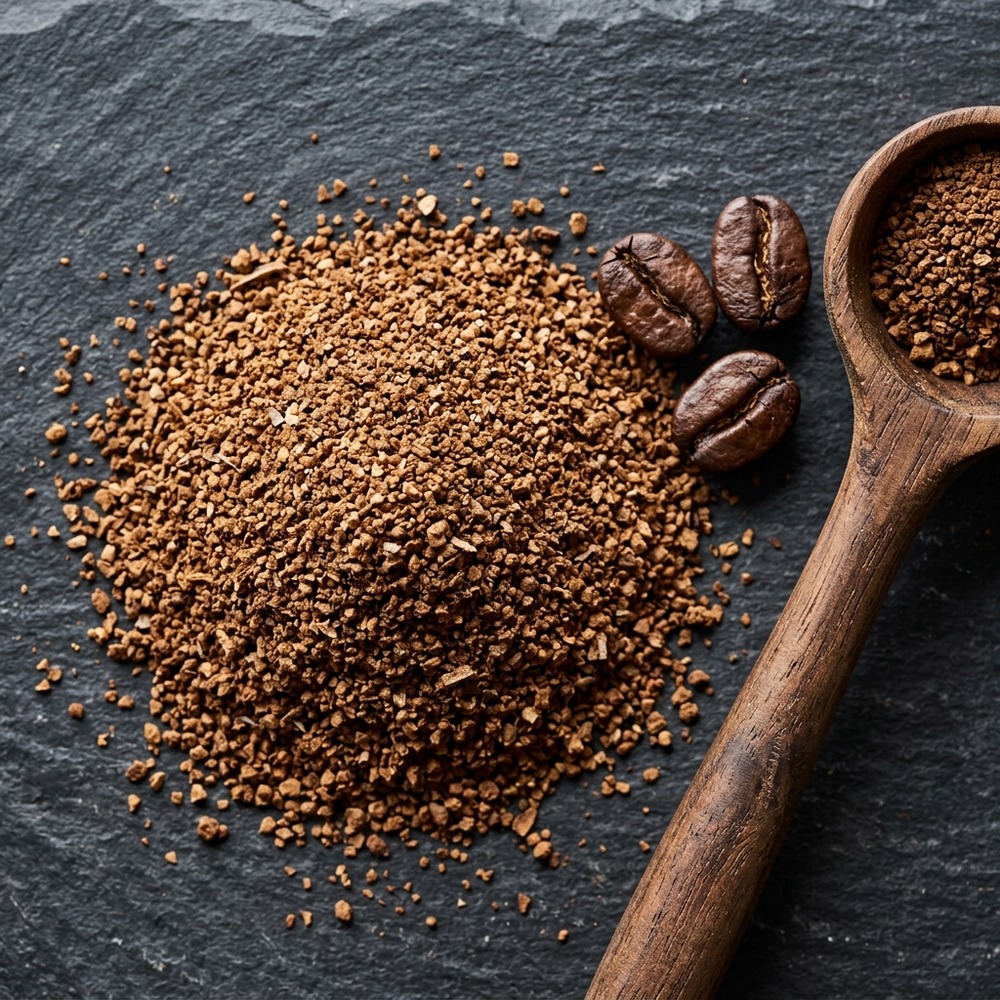
Real Studio Macro Photo • Whole Bean Scale380 – 550 μm
Active Level Profile
0.38 – 0.55 mmMedium-Fine — V60, AeroPress & Siphon
Household FeelFine Beach Sand
Contact Time2:30 – 3:15 Minutes total drawdown
Water Temp202°F – 208°F
Target TDS1.25 – 1.45%
Tactile Finger Test: Individual small grains, dry and non-clumping.
Recommended Brewers: Hario V60 Single Cup, AeroPress (Standard 2-Min), Siphon / Vacuum Pot, Kalita Wave 155.
Extraction Dynamics: Moderate / Controlled percolation. Speed: Moderate-Fast. Fines: 8 – 14% fines.
Barista Extraction Protocol:
•The primary standard for specialty single-cup pour-over.
•Target a flat, clean coffee bed after final water drains.
•If drawdown stalls past 3:30, coarsen grind by 1 click.
Cross-Grinder Dial Setting Converter
Choose your specific burr grinder model to see the exact recommended setting for Medium-Fine.
Selected Model: Baratza Encore / ESP
Dial Setting: 14 – 18
Burr System: 40mm Conical Steel Burrs • Calibrated Scale: 1 to 40 stepped dial
Note: Filter coffee gold standard. For espresso, use Encore ESP.
Fellow Ode Gen 23.1 – 5.1
Comandante C40 MK422 – 27 clicks
Timemore C2 / C317 – 21 clicks
1Zpresso JX-Pro / K-Ultra3.2 – 4.0 rotations
Breville Smart Grinder Pro28 – 36
Hario Mini Mill / Skerton5 – 6 clicks
Interactive Sensory Dial-In Assistant
How does your brewed coffee taste? Select a flavor defect to get instant corrective grinder adjustments.
The Science of Particle Size
Coffee extraction follows Fick's Law of Diffusion: smaller particles = higher surface area = faster extraction.
•Fine grind (200-400μm): Optimized for 9-bar pressure extraction. Target TDS: 8-12%.
•Coarse grind (1000-1500μm): Optimized for immersion. Target TDS: 1.15-1.45%.
"Solubility is a function of surface area. By controlling particle size, we control the rate of chemical diffusion." — SCA Brewing Protocol
The Extraction Sequence
Compounds extract sequentially. The goal is to stop at peak sweetness before bitterness dominates.
Stage 1: Acids (0-30%)
Sour, bright notes
Stage 2: Sugars (18-22%) ✅
Sweet, balanced
Stage 3: Tannins (\u003e22%)
Bitter, dry
Why Burr Grinders Win
Burr grinders crush beans between two surfaces, creating uniform particle sizes. Blade grinders chop randomly.
| Burr | Blade | |
|---|---|---|
| Uniformity | 85-95% | 40-60% |
| Result | Even | Muddy |
What Each Grind Size Looks Like
Compare your coffee grounds to everyday objects for a quick visual reference.
⚫
Extra Coarse
Like Peppercorns
Cold Brew
🧂
Coarse
Like Sea Salt
French Press
🏖️
Medium-Coarse
Like Rough Sand
Chemex
🧂
Medium
Like Table Salt
Drip / V60
⏳
Medium-Fine
Like Fine Sand
Aeropress
🍬
Fine
Like Powdered Sugar
Espresso
🌾
Extra Fine
Like Flour
Turkish
Frequently Asked Questions
What grind size for espresso?
Espresso requires fine grind (200-400μm) — similar to table salt texture. At this particle size, the grounds create enough resistance for 9-bar pressure to extract 25-30 second shots with 8-12% TDS concentration. If your shot pulls in under 20 seconds, grind finer. If it takes over 30 seconds, grind coarser. Most Baratza Encore users start at settings 8-12. Dial in your shot with our Espresso Calculator.
What grind size for French press?
French press uses coarse grind (1000-1500μm) — like sea salt or breadcrumbs. Large particles prevent over-extraction during the 4-minute steep and won't pass through the metal mesh filter. Too fine creates muddy, bitter coffee with excessive sediment. The coarse size allows full immersion without extracting harsh tannins.
Why is my coffee bitter? How to fix with grind size?
Bitter coffee means over-extraction — you've extracted past sugars into tannin territory (\u003e22% extraction). Solution: Grind coarser by 2-3 clicks on your grinder. Larger particles have less surface area, slowing extraction and preventing bitter compounds from dominating. Also check brew time: reduce it if possible.
Why is my coffee sour or acidic?
Sour coffee indicates under-extraction — extraction stopped at the acidic stage before reaching sugars (0-18% extraction). Solution: Grind finer by 2-3 clicks. Smaller particles increase surface area, allowing water to extract sweet compounds. Alternatively, increase brew time or water temperature slightly.
How do I convert grind settings between different grinders?
Grinder models have different scales. Use our grinder conversion database above. General reference: Baratza Encore setting 15 ≈ Comandante 20 clicks ≈ Hario Mini Mill setting 6-7. Always start with manufacturer recommendations for your brew method, then adjust by taste. Document your final settings as each grinder varies slightly even within the same model.
What are coffee grind size microns and why do they matter?
A micron (μm) is 1/1000th of a millimeter. Coffee particle size ranges from 50μm (Turkish) to 2000μm (cold brew). Microns matter because they precisely determine extraction speed via surface area physics. For example, espresso at 300μm extracts in 25 seconds while French press at 1200μm takes 4 minutes. Professional baristas use micron measurements to achieve repeatable results across different grinders and beans. Pair grind size with the right ratio using our Brew Ratio Calculator, or explore coarse-grind brewing with our Cold Brew Calculator.
Should I buy pre-ground coffee or grind at home?
Always grind at home if possible. Coffee beans go stale within 15 minutes of grinding due to rapid oxidation of exposed aromatics. Pre-ground coffee is optimized for generic drip machines (medium grind), not your specific brewing method. Invest in a burr grinder for consistent particle sizes and maximum freshness. Even an entry-level burr grinder (85% uniformity) vastly outperforms blade grinders (40-60% uniformity).
Master the Complete Brewing Science
Grind size is just one variable. Optimize your entire brewing process: